
Security is a legitimate trade with real growth potential. If you approach it with professionalism, documentation skills, and composure, you can move from entry-level positions to high-trust assignments in a matter of months. This guide covers Texas licensing, what to do after you’re licensed, the additional skills that actually raise your pay, how to market yourself to better firms, and which security niches offer the best balance of liability and income. It also includes a list of ten security companies in Houston that actively hire.

1) Understanding Security Guard Licensing in Texas
Security licensing in Texas is regulated by the Department of Public Safety, Regulatory Services Division, under Occupations Code Chapter 1702 and the Texas Administrative Code Title 37, Chapter 35.
Level II – Non-Commissioned Security Officer
This is the entry-level credential for unarmed positions. It requires a Level II training course approved by DPS and a fingerprint background check.Level III – Commissioned Security Officer
This license allows you to work armed positions. It requires a Level III course taught by a DPS-approved instructor, firearms qualification, and background clearance.Level IV – Personal Protection Officer (PPO)
This is the license for executive or close protection work while armed. You must already hold a Level III license and then complete a DPS-approved Level IV PPO course, which typically includes a minimum of fifteen classroom hours and advanced scenario training.
Fingerprinting is handled through IdentoGO by IDEMIA, the official state vendor. Make sure to schedule your prints immediately after completing your training. Renewals typically require eight hours of continuing education, including one hour of ethics, and PPOs must maintain proof of firearms proficiency.
2) Step-By-Step Process: From Civilian to Security Professional:
Select a DPS-approved training school that publishes its license number and offers live firearms qualification for Level III.
Complete your course and obtain the official certificate of completion. Keep both paper and digital copies.
Schedule fingerprints through IdentoGO within 24 hours of finishing your class.
Submit your online application to DPS along with your training certificates.
Begin applying and interviewing while waiting for your pocket card. Professional firms may allow a pre-hire site tour or observation.
When approved, carry your license card and credentials on you at all times per site standard operating procedures.
A fast track is to complete Level II and III through the same provider. Once you have consistent work and reliable references, pursue Level IV for executive protection or bodyguard work.
3) Building Skills That Actually Increase Your Income
Once licensed, you’ll notice that pay differences depend less on the license level and more on extra skills and reliability. In Houston, employers value:
• Medical response: Stop the Bleed, CPR/AED, and BLS certification.
• De-escalation and crisis management: Courses like MOAB or Verbal Judo are highly respected.
• Report writing and incident photography: Clear, timestamped documentation with simple language.
• Access control software: Learning Lenel, Genetec, or Honeywell increases commercial site value.
• Healthcare security: IAHSS Basic certification improves employability at hospitals and clinics.
• Industrial and construction safety: OSHA 10 or 30 certification adds versatility.
• Driving proficiency: EVOC-style or convoy fundamentals for patrol and executive assignments.
• Radio discipline: Short, clear, professional communications set you apart immediately.
4) Marketing Yourself to Better Security Companies
You’ll stand out in the Houston market by treating your career like a trade rather than just a job. Prepare a one-page resume that includes your license levels, expiration dates, and additional certifications. Add three bullet examples of incidents where you resolved an issue, de-escalated a conflict, or improved a process.
Create a portfolio page that includes an anonymized incident report, a patrol log, and a professional-quality photo of a documented issue or safety hazard. These show maturity and attention to detail.
Follow a three-step communication pattern that consistently gets results in Houston:
Submit your online application.
Call the branch within 24 hours to confirm they received it and ask if they allow site ride-alongs.
Show up once, on time, in a clean uniform or business attire with your packet ready.
Asking for a ride-along demonstrates professionalism and initiative. Many managers remember that kind of effort when hiring or promoting.
5) Choosing Your Security Niche: Risk, Liability, and Pay
Different types of security work come with very different expectations.
Lower liability, lower to mid pay
Corporate concierge, museum security, and gatehouse work are good starting points for Level II officers.
Moderate liability with strong pay growth
Healthcare security, industrial plant security, construction site access control, logistics yards, and mobile patrol offer better pay once you gain experience. They reward professionalism, documentation, and safety awareness.
High liability, high pay
Executive protection, strike security, and armed retail deterrence pay the most but require maturity, advanced training, and accountability. The Personal Protection Officer license under Chapter 1702 allows this work legally.
Most new officers find the best balance in healthcare or industrial security with add-on training like CPR/AED and de-escalation. Mobile patrol adds valuable independence and experience.
6) Your First 90 Days On The Job
Weeks 1–2
Learn post orders and client expectations by heart. Build your own opening, mid-shift, and closing checklist. Introduce yourself to the site supervisor or client liaison and ask what their top priorities are.
Weeks 3–6
Refine your reports. Keep entries short, clear, and timestamped. Request to shadow rover or patrol shifts to see how other posts handle incidents. If you’re in healthcare, practice verbal de-escalation. On construction sites, focus on contractor safety and access compliance.
Weeks 7–12
Enroll in an extra skill course that fits your environment—IAHSS for hospitals, OSHA 10 for industrial sites, tactical medical for executive work. Ask for cross-training at another location to broaden your experience. Request feedback from your supervisor and note improvements.

7) Mobile Patrol and Commercial Security: What “Good” Looks Like
Mobile patrol work in Houston is highly valued. It involves randomized patrol routes, door and gate checks, alarm responses, and photographic documentation. Your patrol logs should include clear timestamps, observations, and one supporting photo for any discrepancy or hazard.
Commercial security focuses on visitor management, access control, loading dock safety, and CCTV monitoring. Understanding Lenel or Genetec software makes you more useful to corporate property managers. Learn to distinguish between safety hazards and policy violations and document accordingly.
8) Income Expectations in Houston
Pay varies by level, role, and site type. Level II unarmed officers at low-risk posts start on the lower end, while Level III armed officers at healthcare, logistics, and industrial sites can earn substantially more—especially for night or weekend shifts. Executive protection (PPO) rates vary widely by risk and client profile, often paid daily rather than hourly. Officers who maintain composure, accurate reporting, and professional appearance advance the fastest.
9) Ten Security Companies Hiring in Greater Houston
Securitas – International security leader with a Houston branch and mobile patrol fleet.
GardaWorld – Global provider with armed and unarmed positions across Houston.
Pinkerton – Specializes in executive protection and corporate risk management.
Ranger Guard and Investigations – Houston-based private security firm offering armed, unarmed, patrol, and investigation services. Provides training, and competitive pay across industrial, construction, and commercial accounts.
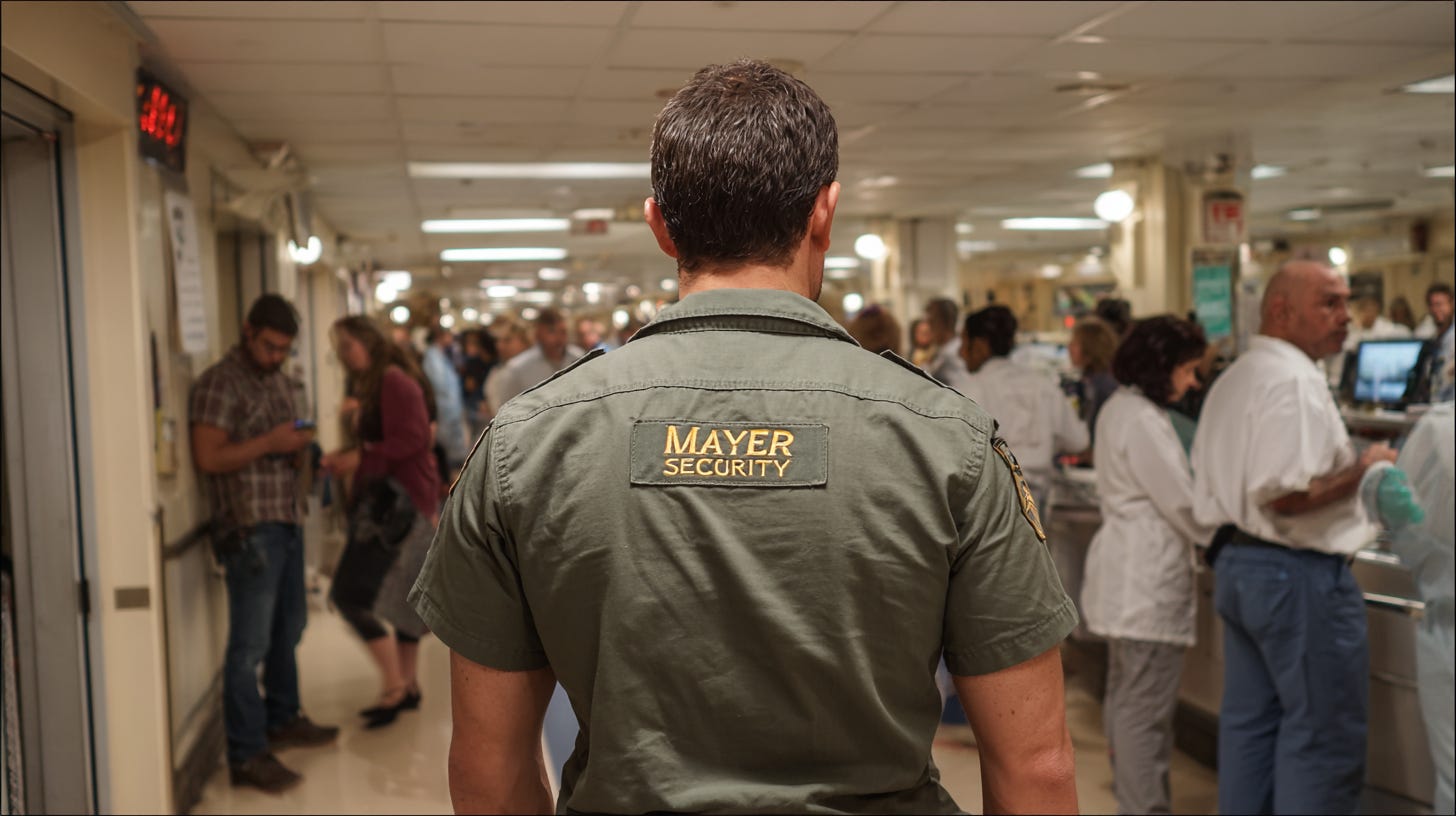
Mayer Security Services – Veteran-owned Houston firm focused on healthcare, industrial, construction, estate, mobile patrol, and executive protection assignments. Emphasizes proactive officers trained in de-escalation, emotional intelligence, and situational awareness.
United Protective Services – Texas-based regional firm with industrial and corporate contracts.
Signal Security (Signal 88) – National franchise model with Houston-area franchises and flexible shift options.
Guards On Call – Regional company with a strong industrial presence across Texas.
Champion National Security – Regional company with a strong industrial presence across Texas.
SEAL Security – Local Houston company providing event, commercial, and patrol security coverage.
10) Compliance, Ethics, and Documentation
The Texas Department of Public Safety enforces all private security rules under Chapter 1702 of the Occupations Code and Title 37, Chapter 35 of the Texas Administrative Code. This includes training hours, firearms qualification, instructor approval, and continuing education standards. Keep every certificate, renewal form, and proficiency record safely stored. Good documentation is not optional; it’s your professional insurance.
11) A 30-Day Action Plan for Houston Newcomers
Week 1
Register for a Level II course and, if you plan to work armed positions, a Level III course at the same school. Schedule fingerprints with IdentoGO immediately after completion. Start drafting your resume and basic incident-report template.
Week 2
Submit your application to DPS. Obtain CPR/AED certification and, if targeting healthcare work, start the IAHSS Basic online course.
Week 3
Apply to ten companies that fit your target niche—healthcare, industrial, patrol, or executive protection. Call at least two offices to ask about interviews or site tours.
Week 4
Participate in a ride-along. Refine your portfolio with what you learned. If aiming for executive protection, identify your next steps toward Level IV licensing and build credibility through reliability, communication, and restraint.

12) Frequently Asked Questions
Do I need Level II before Level III?
Yes. Level II is required for all non-commissioned officers. Level III builds upon it for armed work.How many continuing education hours do I need?
DPS currently requires at least eight CEU hours for most individual licenses, including one hour of ethics. Personal Protection Officers must also show proof of firearms proficiency at renewal.Who does fingerprinting?
IdentoGO by IDEMIA handles all live-scan fingerprints for DPS licensing.Where can I check approved schools and companies?
Visit the DPS Private Security Program website for official listings and license types, including Class B Security Contractors and approved training schools.
13) Final Word
Security in Texas is more than standing a post. It’s a profession built on awareness, communication, and composure. When you get licensed properly, build your technical and interpersonal skills, and choose a niche with balanced risk and opportunity, you can build a stable and respected career. Houston’s diversity of industries—healthcare, energy, logistics, and construction—makes it one of the best cities in the state for skilled security professionals.
Mayer Security Services continues to grow by hiring proactive, emotionally intelligent officers who understand both physical security and human behavior. If you want to be part of that new wave of Texas professionals, start your training today and take your role in protecting Houston’s people, property, and future.