

On paper, a lot of people in major cities should sleep like babies.
Their apartments and houses blink red with cameras. Their offices brag about access control systems that look like sci-fi. Their kids go to schools with more surveillance than the war zones I have seen. The brochures are beautiful. The login screens are slick. Somewhere, a sales team is high-fiving over “end to end coverage”.
I walk through these places at night with a ballistic vest on my chest and a Glock on my hip, and what I mostly see is this: nobody is actually watching.
The cameras stare. The servers hum. The cloud absorbs every second of human life in 4K, compresses it, and stacks it on top of yesterday’s misery in a data center all the way on the other side of the world. But for the nurse walking alone in the parking garage after an angry family promised to “catch her outside,” for the woman who has told her supervisor three times that her ex keeps coming around the building, for the kid who already knows somebody is going to jump him after school, all that blinky gear will not move a single muscle in real time.
On paper, they are safer than they feel.
In reality, they are in more danger than they think.
I grew up in Afghanistan, worked as an interpreter with the Americans, then joined the Marine Corps, then started a security company in Texas. I have been around violence in places with no cameras at all, and in places where you cannot scratch your nose without a lens on you.
What I have learned is this:
More recording does not mean more protection.
What we built is not a safety net. It is an evidence archive.
That is the current state of security, if you strip off the marketing: we film the world and quietly retire the people who used to watching and protecting it.
The Cult Of The Camera
Security used to be simple and human.
There was the doorman who knew every face on the block.
The hotel security guy who actually watched the lobby instead of the screen saver.
The neighbor who smoked on the balcony more than any doctor would recommend, and noticed every unfamiliar van on the street.
Now when I meet a property manager, or a business owner the proud tour starts like this: “We have 120 cameras on site. Everything is covered.”
Yes, and I am still here in a vest and a sidearm, on their dime, which means even they know something in this place smells worse than they are willing to say out loud.
Everything is covered. That is the mantra. Coverage is the idol.
Nobody says “We have three people whose job is to pay attention and intervene before something happens.” That would be unfashionable and expensive. Humans are trouble. They have to be trained. They get tired. They sue you. Cameras just sit there and quietly suck in reality.
The hope is that because there is recording it will be enough of a deterrent.
Here is the ugly secret: most modern security systems are not built to protect you while you are still alive and screaming. They are built to show who was at fault once you are already on the ground.
What the sales people do not tell you is that this kind of faith is innocently foolish. The impulsive, antisocial criminal who is out looking for targets of opportunity does not have the same sense of long-term self preservation as the average normie shuffling between a cubicle, a Starbucks line, and their annual HR training video. They are not thinking about policy, paperwork, or what the video will look like in court.
Most businesses and employers prefer cameras over people because cameras help with compliance and CYA, not because they lose sleep over their employees. They are in the business of reducing cost and increasing profit, and the camera fits that story much better than a human being who might actually step in.
In a lot of places there is literally nobody watching the feed in real time. The system records to the cloud. If something bad happens, someone like me gets a call to pull footage. I download a perfect movie of the worst ten minutes of your life and email it to management, to HR, to lawyers, to police. Everyone shakes their head and says the same line:
“At least we have it on camera.”
They say it like a victory. It sounds to me like a confession.
The Phone Comes Out, Courage Checks Out

It is not just institutions that fail. It is regular people too.
Watch what happens any time a fight breaks out in public now. Street, school, parking lot, restaurant.
Ten phones in the air.
Comments. Nervous laughs.
A chorus of “oh my God” and hardly anyone putting their actual body between the attacker and the victim.
Almost no one steps in, not even verbally. Almost no one walks up to the victim afterward and says “Hey, come with me, we are leaving.”
We trained a whole country that their primary job in a crisis is not to act. It is to document.
You are not a neighbor. You are a content creator.
Recording feels like participation without risk. You get to go home and say “I was there” without ever asking “What did I do about it.”
Every time you film instead of help, you are teaching your own nervous system a story.
I do not interfere.
I am an observer only.
Someone else will step in.
Next time something bad starts happening in front of you, that story arrives faster than your conscience. The phone is already in your hand while your better self is still waking up.
We are outsourcing courage to the camera. We are rehearsing cowardice.
Children, Schools, And The New Violence
When most adults think about school security, they imagine metal detectors, police in the hallway, and lockdown drills. That is the obvious threat.
What is far more common, and easier to miss, is humiliation.
It does not lead the evening news, but it can injure a child just as deeply and for much longer.
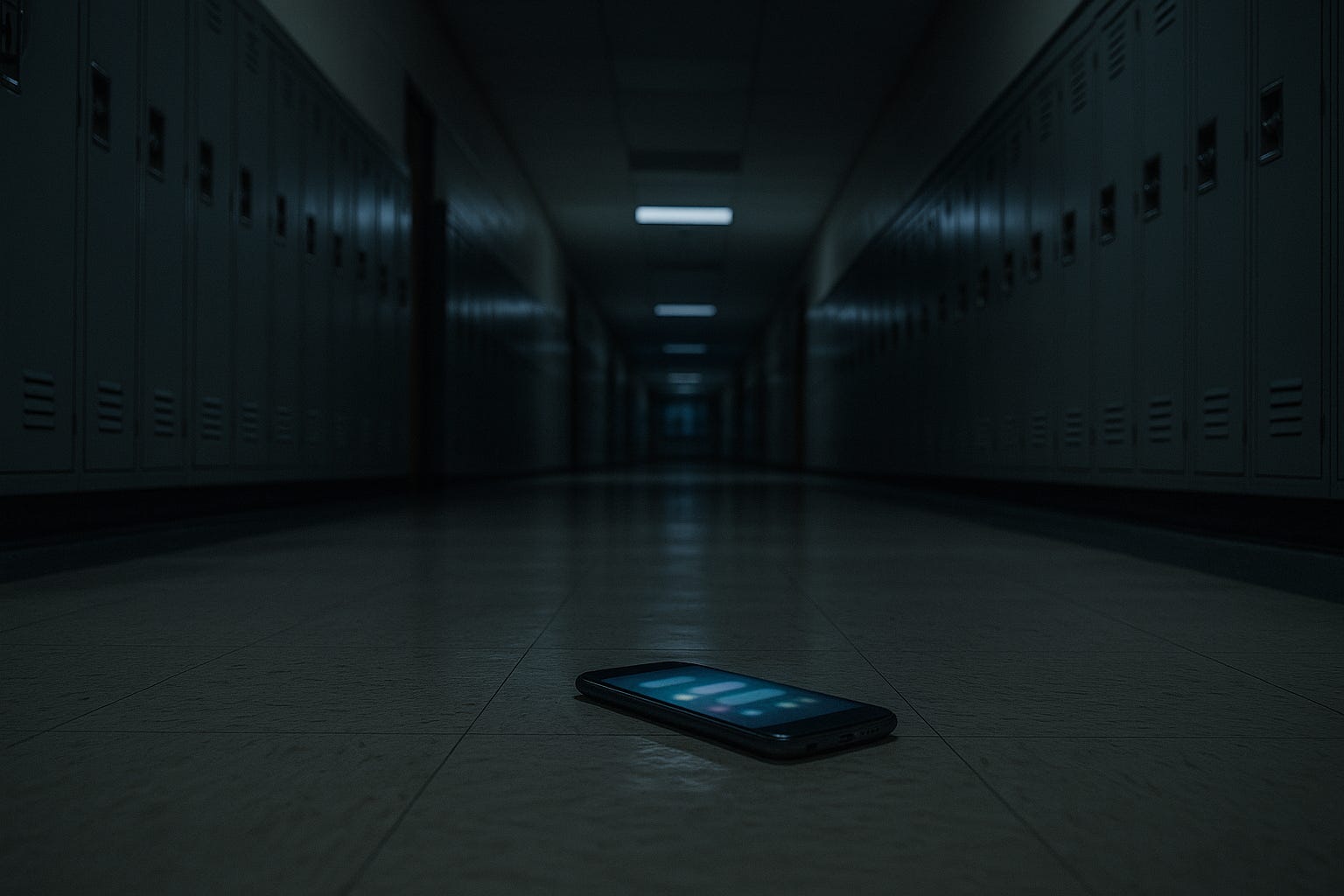
The real damage often happens in group chats, Snap stories, and Discord servers. It lives in the invisible hallways inside a teenager’s phone.
A student sends one reckless photo to someone they think they can trust. The relationship ends. The image does not. It is copied, edited, and passed around. AI tools can add more detail and create entire fake images or videos with that child’s face. Very quickly, their reputation becomes a piece of circulating content.
Or a beating happens behind the gym. The punches stop in the parking lot. The video does not. A few students post it, hundreds watch it, and the victim relives it every time the clip appears again.
For a teenager, social destruction can feel very close to physical harm. The body still reacts with panic, shame, and fear, even when the weapon is a phone.
Most schools still file this under “online drama”. Parents tell kids to “stay off their phones for a while”, as if the problem is screen time instead of a focused campaign against one child.
If you are the adult in the room, treat this as real violence.
Tell kids that what happened to them is serious, not a joke.
Make it clear that protecting them matters more than avoiding bad publicity for the school.
Spend more time understanding their digital life than lecturing them about strangers in parking lots.
You cannot put a metal detector on a group chat, but you can stop pretending that what happens there is harmless.
Domestic Violence And Stalking: Old Problem, New Tools
The most dangerous person in your life is almost never a stranger in an alley. It is the person who decides your freedom is a problem.
That has always been true. What is new are the tools that person can buy on amazon or download in ten minutes.
AirTags and trackers hidden in cars and bags.
Shared family phone plans that let one person see everyone’s location.
“Mutual” passwords for email, bank accounts, and cloud storage.
Doorbell cameras and smart locks controlled from one partner’s phone.
On top of that, social media acts like free surveillance. If you do not deliberately create distance, an ex can see where you go, who you are with, and when you are home.
If a breakup feels unsafe, treat it like a security event, not gossip.
Log out of all sessions and reset passwords.
Check location sharing and stop it.
Look at your accounts and devices the way an intruder would. Where can they see you or control you.
If someone shows you that your autonomy is a threat to them, believe them. Everything after that is just time and opportunity.
The Paradox: Less Violence, More Fear
Here is the first uncomfortable truth. In a lot of places, if you compare the numbers to the 80s and 90s, some types of violent crime are flat or even down. Yet the average person feels less safe than their parents did.
Part of that is math. One bad incident on your block feels bigger than a hundred statistics on a government chart.
Most of it is business.
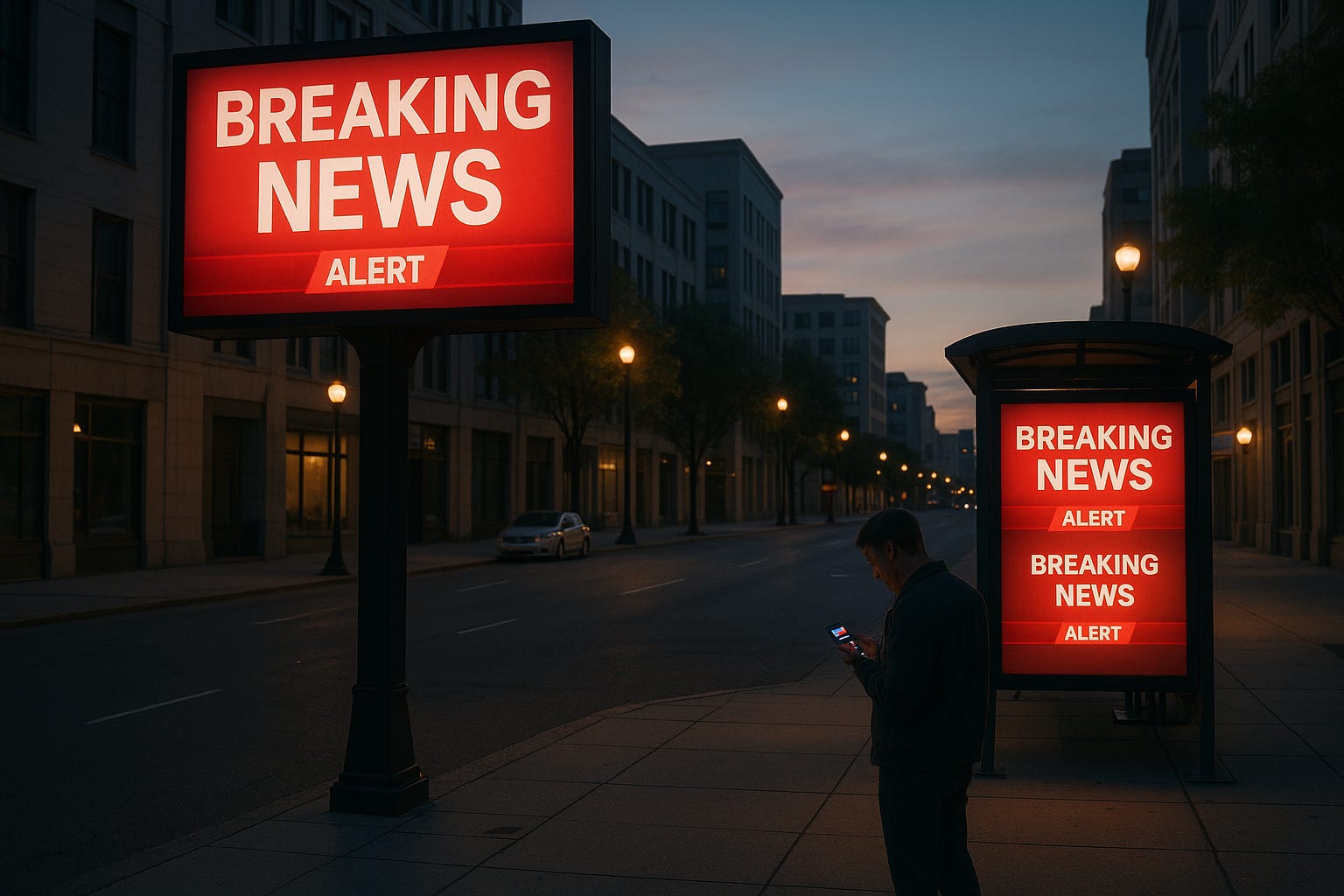
Fear is now a commercial product. Social media feeds, twenty four hour news, camera companies, alarm companies, political campaigns. Everyone is in the race to be the loudest alarm in the room. Every notification is a little shove that whispers the same thing: “You are not safe unless you listen to us.”
The problem is not fear itself. Fear is a survival system. The problem is junk fear. When you live in a permanent fire drill, it becomes harder to hear the one smoke alarm that actually matters.
What Ordinary People Can Actually Do
If all of this stayed at the level of complaining, it would just be my therapy bill. So here is the practical part.
For yourself and your family:
Treat unease as data, not as a character defect.
Leave rides, dates, and places when they feel wrong, even if that makes you look “rude”.
Make a house rule that no one wires money or gives up passwords based only on a call, text, or video. Always verify through a second path.
After any breakup that feels even slightly dangerous, reset passwords, end shared accounts, and check devices for tracking.
For kids:
Talk about humiliation and deepfakes the way you would talk about drugs or drunk driving. Calm, serious, no sugar coating.
Make it clear that if they get in over their head online, you will fight the people abusing them before you punish them for the original mistake.
Watch for school avoidance, sudden withdrawal, or panic around their phone. Those can be signals of ongoing digital violence.
At work:
Push for clear reporting channels for threats, stalking, or domestic situations that might follow someone to the office.
Support colleagues who come forward, instead of treating them like a problem to manage.
If you run a company, start measuring and rewarding incidents that were prevented or diverted, not just incidents that were handled.
And everywhere:
When something looks wrong in front of you, ask yourself if pulling out your phone is really the move your future self will be proud of. Sometimes the bravest thing you can do is simply walk over, stand next to the victim, and be a second human body who refuses to look away.
The Only Upgrade That Matters
We are heading into a future full of fake faces and real blood. AI will get better. Cameras will get cheaper. Storage will get bigger. Every square inch of public life will be filmed.
You can keep chasing that or you can remember the one upgrade that still works exactly the way it did before electricity.
A human being who is actually paying attention.
A human being who is allowed to decide.
A human being who is willing to step in while there is still time.
You cannot download that. You cannot automate it. You have to choose it, train it, and back it up when it acts.
From combat zones in Afghanistan, to the Marine Corps, to Houston manufacturing plants, and hospitals at three in the morning, that is the pattern I see.
On paper, we are safer than we feel.
In practice, we are in more danger than we think.
Because the world is being filmed from every angle.
And almost nobody is watching.
Jason Essazay is an Afghan-born former interpreter for U.S. forces, a Marine Corps veteran, and the owner of Mayer Security Services security company in Texas. He spends his nights walking the places people assume are safe and writes about what violence really looks like on the ground.
